
by Kevin Burke
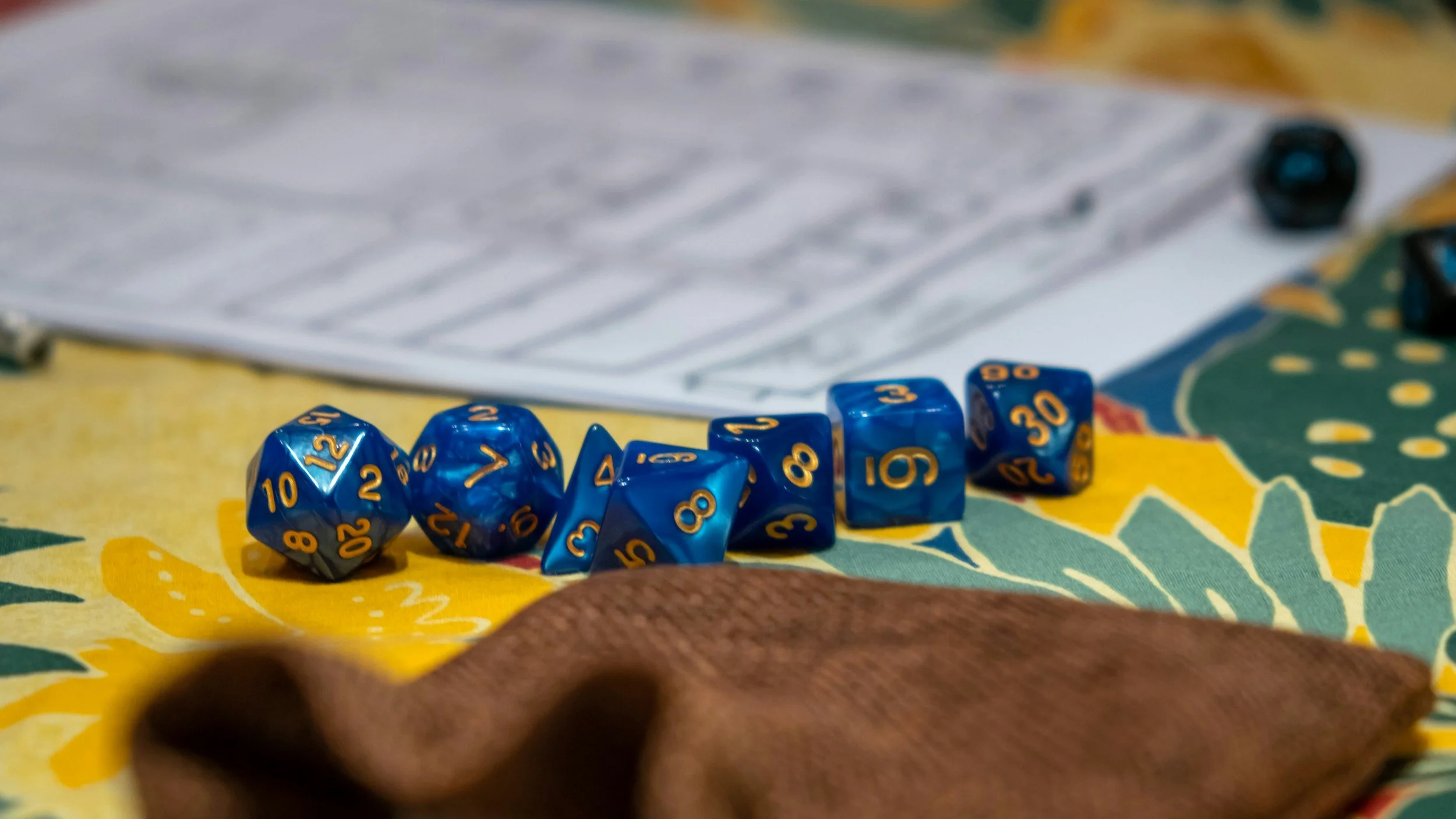
Tabletop role-playing games (TTRPGs), specifically Dungeons & Dragons, have seen a major resurgence in the last decade. While it’s hard to pinpoint what led to this meteoric rise in recognition, many agree it was fueled by the popularity of live-play media like Dimension 20, television shows such as Stranger Things, and a heightened need for creative, remote connection during the COVID-19 pandemic. Alongside this contemporary rise in TTRPGs, there has also been an exponential increase in the expressed need for mental health services (again, looking at you COVID). These two ideas swirling around in the collective consciousness have in fact collided into the development of therapeutically applied tabletop role-playing games (TA-TTRPGs). In other words, games like Dungeons & Dragons are being used in therapy spaces with surprising efficacy. While early applications focused primarily on social skills for neurodivergent youth and adolescents, recent research on TA-TTRPGs has expanded to include the treatment of trauma-related disorders like PTSD and Complex Post-Traumatic Stress Disorder (CPTSD).
For those uninitiated in tabletop gaming, here’s a bit of a lore-dump: Modern TTRPGs originated in the mid-1970s and have since evolved into a diverse genre centered on shared, collaborative storytelling. In these games, players create unique characters and inhabit a world crafted by a "game master" or "dungeon master" who facilitates the adventure. The narrative progresses based on player decisions, which are resolved through a combination of character attributes and dice rolls to determine success or failure. Unlike traditional games, TTRPGs do not have a standard "win" condition; instead, the primary objective is to build a memorable, ongoing story and foster relationships within the “adventuring party” or the people you are playing with.
As stated, initial therapeutic research highlighted the efficacy of TA-TTRPGs in social development for adolescents and children with autism. However, broader clinical applications have demonstrated that eight weeks of gameplay for young adults can result in significant reductions in depression, anxiety, and stress, while simultaneously improving self-esteem and self-efficacy. Mixed-methods data further indicate that TA-TTRPG groups achieve statistical parity with traditional interpersonal process groups regarding general psychological functioning. Qualitatively, the game acts as a "transformational container" for identity development, providing players with a safe space for escapism and self-exploration.
The inherent flexibility of the medium of TTRPGs allows clinicians to tailor interventions to specific needs. What might this look like in game? A practitioner might utilize behavioral rewards (e.g., in-game items or spells) to encourage real-world goals like building trust. Furthermore, the narrative themes can be symbolic of the healing process, such as a quest to help a benevolent deity reclaim a "lost voice" after a spiritual injury. This combination of traditional trauma processing and social repair makes TA-TTRPGs a highly viable intervention for CPTSD.
Regarding their use in treating trauma, I posit that TA-TTRPGs are particularly well-suited for treating CPTSD. CPTSD is a diagnosis characterized by a combination of traditional PTSD symptom presentation alongside Disturbances in Self-Organization (DSO)—specifically affect dysregulation, negative self-concept, and relational difficulties. While traditional treatments like CBT or EMDR are effective for simple PTSD, they are often less successful for individuals with complex histories of childhood trauma. TA-TTRPGs address these gaps by integrating proven mechanisms like imaginal exposure and dramatic projection within a foundation of social connectedness.
One of the most striking findings in TA-TTRPG research I found is its ability to sustain client participation. While traditional group therapy often sees dropout rates between 52% and 57%, TA-TTRPG groups have demonstrated attrition rates as low as 7.69%. This high retention is attributed to the immersive and engaging nature of the gameplay, which serves as a vital entry point for clients who might otherwise be resistant to therapy. For example, veterans with PTSD who were previously averse to group therapy reported attending specifically because of the game's presence, eventually completing full twelve-week programs with positive outcomes. Moreover, this approach has baked in inclusivity for a variety of client populations.
TA-TTRPGs promote inclusivity through both game design and clinical facilitation. Major industry leaders have shifted away from "radicalized tropes" and exclusionary language, and clinicians are encouraged to use diverse non-player characters (NPCs) to deconstruct stereotypes. The modality serves as a vital platform for identity exploration, allowing LGBTQIA+ and gender-nonconforming participants to use character "masks" to practice being their authentic selves, which often leads to increased real-world confidence. Marginalized individuals are empowered to inhabit the role of the hero, staying true to their values while overcoming immense odds. For neurodivergent populations, the "magic circle" of the game provides a safe environment for social practice without real-world social consequences. To ensure these spaces remain safe and inclusive, clinicians utilize tools like "Session Zero" to discuss triggers and establish group boundaries. These collaborative experiences foster genuine social connection and long-lasting friendships among diverse participants.
TA-TTRPGs represent a promising intersection of play, narrative, and clinical practice. Their core strengths—collaborative storytelling and sustained social connection—are highly transferable to therapeutic contexts and may exceed traditional therapies in retention and client engagement. As an adaptable and culturally responsive modality, TA-TTRPGs empower marginalized clients and provide a powerful tool for processing complex interpersonal trauma. By welcoming clients to the table, mental health professionals can leverage the therapeutic power of shared imagination to meet clients where they are.
While writing this shortened version of my capstone, I was listening to Aesop Rock’s albums The Impossible Kid and I Heard It’s a Mess There Too. Proofreading and editing was done with “Stranger Things Ambience: Rain Sounds and Music”.
The following is a comprehensive list of all of the sources explored for my capstone. It’s long, but I wanted to include it to help others who may be researching further into this field or who are just curious and interested.
References
Abbott, M. S., Stauss, K. A., & Burnett, A. F. (2022). Table-top role-playing games as a therapeutic intervention with adults to increase social connectedness. Social Work with Groups, 45(1), 16-31. American Psychiatric Association. (2022). Title of chapter. In Diagnostic and statistical manual of mental disorders (5th ed., text rev.).
Battles, A., & Quinlan, T. (2021). Rolling for recovery: Apa symposium on therapeutically applied role-playing games. YouTube. Retrieved February 22, 2024, from https://www.youtube.com/watch?v=Ml1qoxygUtE.
Carbonell, C. D. (2019). Dread Trident: Tabletop Role-Playing Games and the Modern Fantastic (Vol. 60). Liverpool Science Fiction Texts & Studies.
Chun, S. M. (2024). Dungeons & Dragons & Dissertations: A Study of Therapeutically Applied
Tabletop Roleplaying Game Groups at a University Counseling Center (Doctoral
dissertation, Brigham Young University).
Cloitre, M. (2021). Complex PTSD: Assessment and treatment. European Journal of
Psychotraumatology, 12(Suppl. 1), https://www.tandfonline.com/doi/full/ 10.1080/20008198.2020.1866423
Cloitre, M., Hyland, P., Prins, A., & Shevlin, M. (2021). The international trauma questionnaire(ITQ) measures reliable and clinically significant treatment-related change in PTSD and complex PTSD. European Journal of Psychotraumatology, 12(1), 1930961.
Compton, L., & Schoeneberg, C. (2020). Preparing for trauma work in clinical mental health: A workbook to enhance self-awareness and promote safe, competent practice. Routledge.
Connell, M. A. (2023). Tabletop role-playing therapy: A guide for the clinician game master. WW Norton & Company.
Davis, D., & Alexanian, S. (2024). Role-playing recovery in social virtual worlds: adult use of child avatars as PTSD therapy. Computer Methods and Programs in Biomedicine Update, 5, 100129.
Enfield, G. (2007). Becoming the hero: The use of role-playing games in psychotherapy. Using superheroes in counseling and play therapy, 227-241.
Foo, S. (2023). What my bones know: A memoir of healing from complex trauma. Ballantine
Books.
Game to Grow, Davis, A., Johns, A., & Spielmann, V. (2021). Facilitator’s Guide (Version 1.3.0).
Game to Grow.
Game to Grow, Johns, A., Davis, A., & Spielmann, V. (2020). The little town of Tusk: A Level 1
Adventure Module for the Critical Core Game System (Version 1.2.0). Game to Grow.
Henrich, S., & Worthington, R. (2023). Let your clients fight dragons: A rapid evidence assessment regarding the therapeutic utility of
‘Dungeons & Dragons’. Journal of Creativity in Mental Health, 18(3), 383-401.
Howell, D. (2023). Dealing with your dragons: Counseling through Dungeons and Dragons. Educational Specialist, 2020-current. 76. https://commons.lib.jmu.edu/edspec202029/76
Hyland, P., Shevlin, M., Brewin, C. R., Cloitre, M., Downes, A. J., Jumbe, S., ... & Roberts, N. P.
(2017). Validation of post‐traumatic stress disorder (PTSD) and complex PTSD using the
International Trauma Questionnaire. Acta Psychiatrica Scandinavica, 136(3), 313-322.
Karatzias, T., Murphy, P., Cloitre, M., Bisson, J., Roberts, N., Shevlin, M., ... & Hutton, P.
(2019). Psychological interventions for ICD-11 complex PTSD symptoms: Systematic
review and meta-analysis. Psychological medicine, 49(11), 1761-1775.
Maté, G. (2022). The myth of normal: Trauma, illness, and healing in a toxic culture. Penguin.
Mendoza, J. (2020). Gaming intentionally: A literature review of the viability of role-playing
games as drama-therapy-informed interventions. https://digitalcommons.lesley.edu/ expressive_theses/322
Merrick, A., Li, W. W., & Miller, D. J. (2024). A study on the efficacy of the tabletop
roleplaying game Dungeons & Dragons for improving mental health and self-
concepts in a community sample. Games for Health Journal, 13(2), 128-133.
10.1089/g4h.2023.0158
National Institute of Mental Health. (2022, January 1). Mental illness. Retrieved February 22, 2024, from https://www.nimh.nih.gov/health/statistics/mental-illness#part_154785
Parks, S. L. (2021). Social Learning among Autistic Young Adult Tabletop Role Players: A Grounded Theory Study (Doctoral dissertation, Capella University).
Rami, K. (2025). Playing with pain: A literature review of table-top role-playing games in
therapy and their treatment of trauma and PTSD. SUNY New Paltz Journal of
Psychology, 1. https://ojs.newpaltz.edu/index.php/SNPJP/article/view/10
Rivers, A., Wickramasekera, I. E., Pekala, R. J., & Rivers, J. A. (2016). Empathic features and absorption in fantasy role-playing. American Journal of Clinical Hypnosis, 58(3), 286-294.
Rutberg, E. (2016). Beyond Words: Learning to Use Role-Play to Treat Posttraumatic Stress Disorder. The Journal of Psychodrama, Sociometry, and Group Psychotherapy, 64(1), 25-39.
Schwartze, D., Barkowski, S., Strauss, B., Knaevelsrud, C., & Rosendahl, J. (2019). Efficacy of group psychotherapy for posttraumatic stress disorder: Systematic review and meta-analysis of randomized controlled trials. Psychotherapy Research, 29(4), 415-431.
Seiler, N., Davoodi, K., Keem, M., & Das, S. (2023). Assessment tools for complex post
traumatic stress disorder: A systematic review. International Journal of Psychiatry in
Clinical Practice, 27(3), 292-300.
Walsh, O., & Linehan, C. (2024). Roll for insight: Understanding how the experience of playing
Dungeons & Dragons impacts the mental health of an average player. International
Journal of Role-Playing, (15), 36-60. https://doi.org/10.33063/ijrp.vi15.321
Wilson, D. R. (2023). The world of Dungeons and Dragons as a therapeutic approach to
complex trauma. Liberty University. World Health Organization. (2022). ICD-11.
Wright, J. C., Weissglass, D. E., & Casey, V. (2020). Imaginative role-playing as a medium for moral development: Dungeons & Dragons provides moral training. Journal of Humanistic Psychology, 60(1), 99-129. https://doi.org/10.1177/0022167816686263